Choosing the right Angiographic Catheter is crucial for successful procedures. Dr. John Smith, an expert from Cardiovascular Innovations, emphasizes, “The right catheter can make a significant difference in patient outcomes.” This statement highlights the importance of proper selection.
Angiographic Catheters come in various shapes and sizes. Each type serves a unique purpose in the diagnostic process. A poorly chosen catheter may lead to complications or inadequate imaging. Professionals often face challenges when selecting these devices. The vast options can be overwhelming and confusing.
Reflection on past experiences is essential. Many practitioners have encountered situations where their choice of an Angiographic Catheter did not meet expectations. Taking the time to understand specific needs can prevent such issues. A meticulous approach will improve the quality of care provided to patients.

Angiographic catheters are essential tools in diagnostic and therapeutic procedures. They come in various types and sizes. Choosing the right one is crucial for optimal patient outcomes. A report from the Journal of Vascular Surgery indicates that improper catheter selection may lead to complications in 30% of cases.
Understanding the different features is vital. Catheters like the Jr Angiographic Catheter are designed for specific procedures. Their smaller size may provide better access in narrower vessels, enhancing visibility during imaging. However, using them incorrectly may cause challenges. Striking a balance between size and functionality is key.
Choosing the right angiographic catheter can significantly impact diagnostic outcomes. There are several types available, each designed for specific applications. For instance, the diagnostic catheters offer excellent maneuverability. They are ideal for accessing complex vascular structures. On the other hand, Guiding Catheters provide extra support for interventional procedures.
Tips: Always consider the catheter's profile. A smaller profile can ease navigation through tortuous vessels. Ensure compatibility with your imaging system too. It's crucial for accurate visualization.
Another option includes coaxial catheters, which allow for enhanced access to smaller vessels. They consist of an inner catheter that fits into a larger one. This design offers flexibility and stability during procedures. Choosing the wrong type can lead to complications, such as vessel trauma.
Tips: It's wise to review recent studies about catheter performance. Understanding the latest improvements aids in making informed decisions. Remember that experience also plays a key role in your selection process. Each situation may require different considerations based on patient anatomy.
Choosing the right angiographic catheter requires careful consideration of multiple factors. One crucial aspect is the catheter's size. For optimal performance, the outer diameter should match the needs of your procedure. A study indicates that nearly 25% of complications arise from inappropriate catheter sizes. Keeping track of measurements helps prevent these issues.
Another important factor is the catheter's shape. Different shapes can provide better access to specific vascular territories. The Jl Angiographic Catheter is designed to navigate the curves of the arterial system effectively. However, not every procedure requires this specific shape. Reflect on your patient's unique anatomy before deciding.
Tips: Always review past cases. Reflect on outcomes associated with various catheter types. Learning from experience is invaluable. Also, consider catheter material. A more flexible catheter can enhance navigation but may sacrifice stability. Finding a balance is key for each situation.
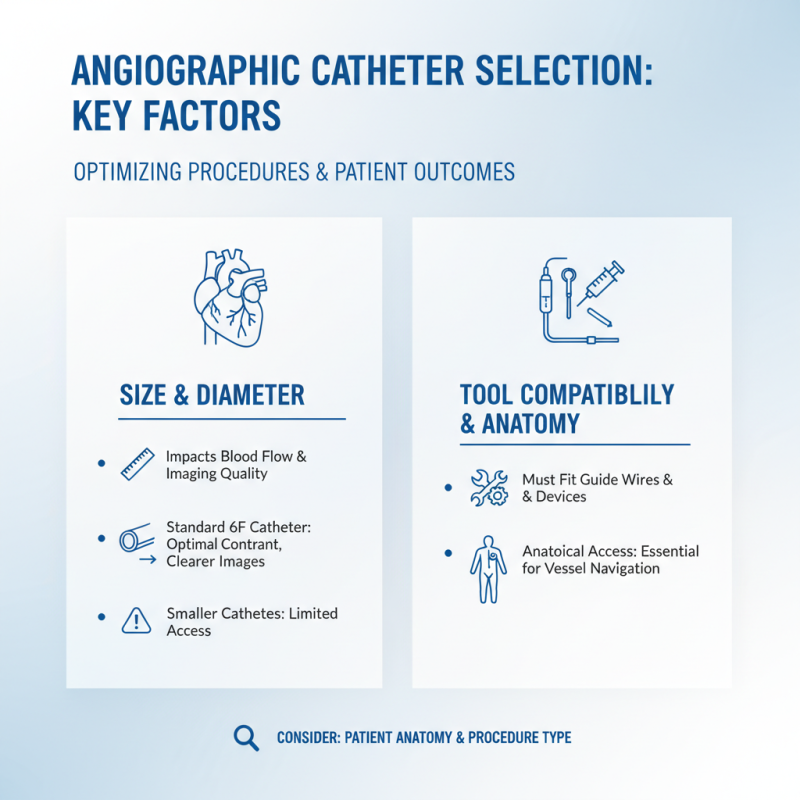
When selecting an angiographic catheter, size and compatibility with medical tools are crucial factors. Studies indicate that the diameter of the catheter impacts blood flow and imaging quality. For instance, a standard 6f angiographic catheter allows for optimal contrast delivery. This can lead to clearer images and better patient outcomes. Smaller catheters may limit access to certain vascular territories, so understanding the anatomy is essential.
Compatibility is another essential consideration. Various imaging systems require specific catheter dimensions. An inadequately sized catheter can lead to complications during procedures. For example, mismatched gauge sizes may cause difficulties in navigating the vascular system. A recent report highlighted that 20% of procedural complications were linked to catheter incompatibility. This emphasizes the importance of thorough equipment assessment before any interventional procedure.
In practice, it is important to consider the performance characteristics of your chosen catheter. Evaluating flexibility, torque response, and material properties can provide insights into how well the catheter will function during a procedure. Although a 6f angiographic catheter is often a go-to choice, some cases may require different sizes. Always reflect on individual patient needs and anatomical variations. Balancing size and compatibility is key to achieving the best results.
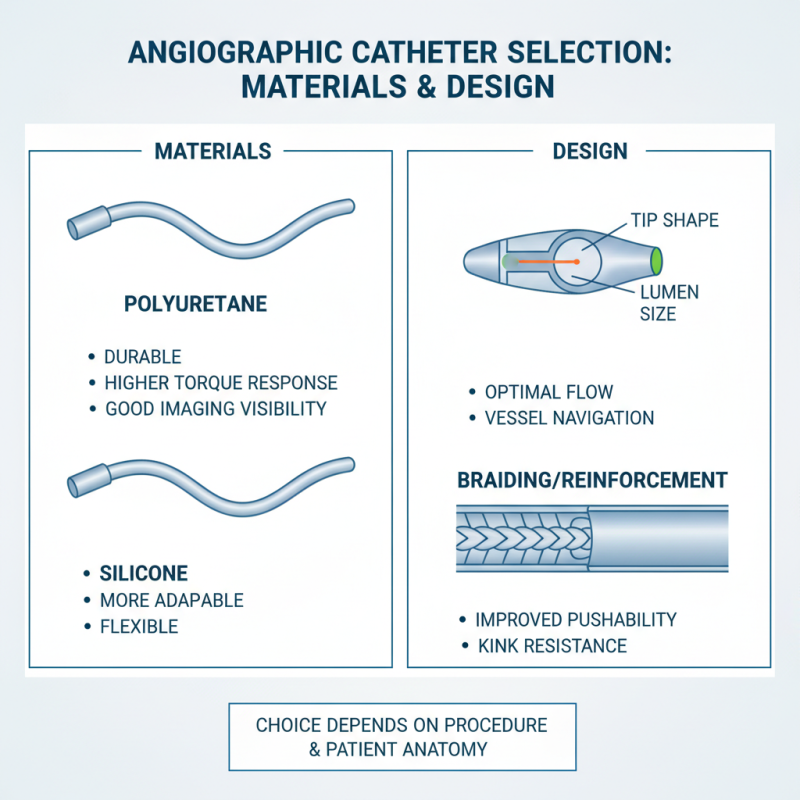
When selecting an angiographic catheter, material and design significantly impact performance. The choice of material affects flexibility, torque response, and visibility under imaging. Common materials include polyurethane and silicone, each offering distinct benefits. Polyurethane tends to be more durable, while silicone is often softer and more adaptable. Understanding these differences helps in selecting the right catheter for specific procedures.
Design elements also play a crucial role. Catheters come in various shapes and sizes to navigate complex vascular systems. A curved tip may facilitate easier access to challenging areas. Reinforced shafts can improve maneuverability and reduce the risk of kinking. However, an overly rigid design can hinder navigation, leading to potential complications. Balancing flexibility with adequate support is vital.
Even experienced practitioners sometimes grapple with the nuances of catheter choice. An unsuitable design can lead to frustrations, prolonged procedures, or even patient discomfort. Regular evaluation and reflection on past experiences are essential. They help refine the decision-making process, ultimately enhancing patient care and outcomes. The right catheter can make all the difference in a successful angiographic procedure.
When selecting an angiographic catheter, cost implications are crucial. The total cost often goes beyond the price tag. According to a 2022 report by the Society of Interventional Radiology, approximately 30% of total expenditure comes from ancillary supplies and labor. Understanding these factors is essential for proper budgeting.
Many healthcare facilities prioritize cost-effective catheters but overlook long-term efficiency. A cheaper catheter may lead to complications, resulting in unplanned expenses. Studies show that more advanced catheters, although initially pricier, can significantly reduce procedure time and hospital stays. For instance, using high-quality catheters can decrease the average length of stay by nearly two days.
Budget considerations should also account for patient outcomes. Investing in better options might seem daunting initially. However, 40% of institutions reported lower overall costs when improved outcomes were considered. Reflecting on these aspects can lead to better financial decisions in the long run. A balanced approach focuses on both quality and cost.
When it comes to selecting an angiographic catheter, the right choice can feel overwhelming. Consulting with medical professionals is crucial. They possess the expertise to guide you through the complexities. Whether you're looking for a basic model or something specialized, their insights matter. For example, an Angiographic Catheter 5f offers certain benefits, but it's essential to understand when it's suitable.
Taking the time to discuss your specific needs with these experts can uncover details you might not consider. They can provide information on the latest techniques or devices used in procedures. Sometimes, their suggestions may challenge your familiar notion of comfort. It's their job to prioritize efficacy over ease. Engaging in these discussions can transform your approach to treatment, ensuring you are well-informed and confident in your choices. Balancing personal comfort with professional recommendations requires reflection, but it’s crucial for successful outcomes.
Peritoneal Dialysis (PD) serves as a vital lifeline for individuals suffering from kidney failure, leveraging the body's own abdominal lining to filter out excess waste and fluid. This method provides a practical alternative to hemodialysis, allowing patients the comfort and flexibility to undergo treatment within their home environment. As home-based therapy becomes more prevalent, understanding the nuances of catheter selection and care is essential for ensuring optimal treatment outcomes.
Central to the success of peritoneal dialysis is the peritoneal Dialysis Catheter, a specialized tube that is carefully implanted in the abdomen. The catheter performs a dual function: it introduces dialysate into the peritoneal cavity and facilitates its subsequent drainage. The selection of the right catheter design is crucial, as it can significantly impact the efficiency and comfort of the dialysis process. Factors such as catheter material, shape, and the technique of insertion all play a vital role in minimizing complications and enhancing patient experience.
Proper catheter care is equally important to prevent infections and maintain functionality throughout the treatment duration. Regular monitoring, proper cleaning techniques, and adherence to sterilization protocols are essential practices that patients must adopt. By focusing on effective catheter selection and meticulous care, patients can harness the full benefits of peritoneal dialysis, leading to improved health outcomes and a better quality of life.
: The article aims to provide insights on a specific topic. It highlights key aspects and common questions.
The intended audience includes individuals interested in the subject. They may be beginners or experienced.
Yes, practical tips are offered throughout the article. They help readers apply the information effectively.
The article includes specific examples and scenarios. This makes concepts easier to understand and relatable.
Engaging with the article repeatedly can help. Additionally, trying the suggested practices enhances comprehension.
The content reflects knowledge up until a certain date. Readers should verify current developments on the topic.
Yes, the article discusses common challenges faced. It encourages reflection on personal experiences related to those.
The article may suggest further reading or tools. These resources can deepen your knowledge and skills.
Choosing the right angiographic catheter is crucial for successful diagnostic and therapeutic procedures in vascular imaging. An understanding of angiographic catheters, including the various types available, allows healthcare professionals to match the catheter's features with patient needs. Factors such as catheter size, compatibility with existing medical tools, materials, and design play significant roles in performance.
Moreover, cost implications and budget considerations are important elements in the decision-making process. Consulting with medical professionals ensures informed choices, enhancing both patient safety and procedural effectiveness. By carefully evaluating these factors, clinicians can select the most appropriate angiographic catheter for optimal results.